 Merch
Merch
Trident Tee
Navy heavyweight tee, gold trident and wordmark on the chest. Unisex, true to size.
$34
A 52-week leadership operating system for your whole company. Your managers watch, execute and debrief every week, on your rhythm, until running the place without you is the default.
 Everything still runs through you
Every fire, every next step, every real decision still lands on your desk. Your managers are good people who were never trained to lead, so they escalate. You’re not running a company, you’re babysitting one, and it stops growing at the edge of your calendar.
The academy replaces motivation with a system: one weekly rhythm, one set of standards, run by your leaders in your business, with a record of who did the work.
Every week of the program trains one of these. Together they turn a team that waits for you into a team that runs without you.
Ownership is given on purpose, with clear limits, so people stop asking permission and start making decisions.
Leaders are duplicated, not hoarded. Your best people learn to build the next layer beneath them.
Standards are set by example and reinforced in rhythm, not by a speech once a quarter.
Controlled autonomy replaces micromanagement. Trust is earned through repeatable execution, then extended.
Weekly orders, debriefs and a monthly muster make follow-through the default, not the exception.
Every week your leaders watch a short lesson from Brandon, execute one order in the business, and debrief what happened. Every fourth week the whole company musters. Nothing is theory. Everything is done in the field.
A lesson from Brandon, and the matching chapter from the book, read or listened to in his own voice.
One Execution Order, specific to the role. Something a manager does on the floor this week, not something they think about.
What happened, what got in the way, what changes next week. Written, visible to the leader above them.
Muster. The company closes a mission together: results on the table, standards reset, next mission briefed.
Each company gets its own private academy. Seats for your people, a dashboard for whoever runs the place, and a record of who is actually doing the work.
 Every role. Every week.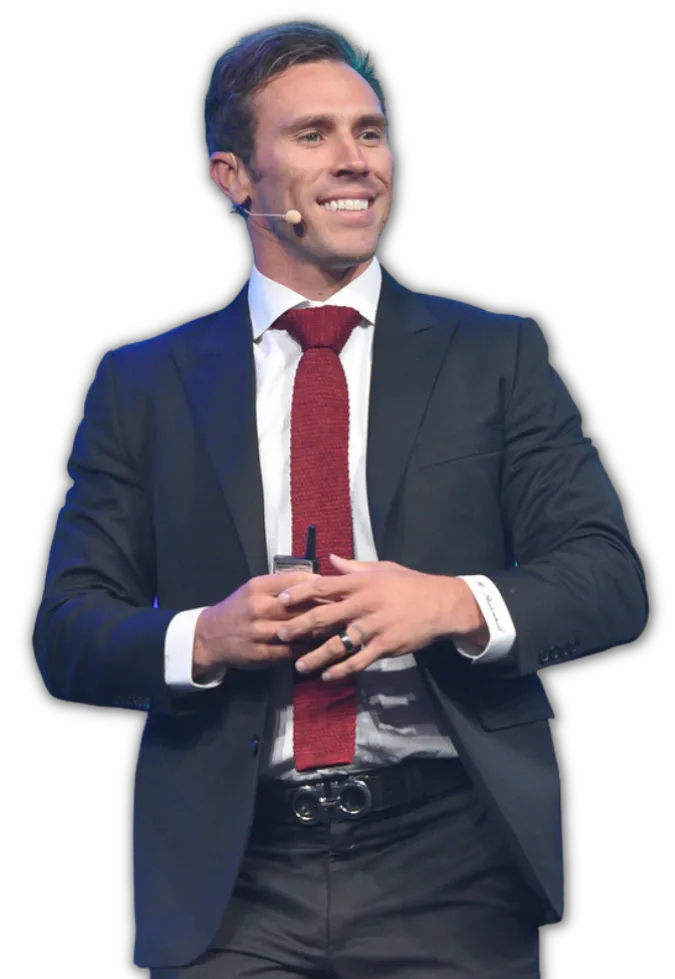
Former Navy SEAL and nine-figure sales architect. Fourteen years in the Navy, twelve of them as a SEAL, three combat deployments, and three years teaching First Phase at BUD/S, the course that decides who becomes a SEAL. Then he left and built a sales organization that produced more than $100 million in revenue, using the same systems.
Author of The ELITE Leadership Blueprint. Host of The Journey to Win podcast. Consults for sales and executive teams from startups to nine-figure enterprises.
A Navy SEAL’s proven system to duplicate leaders, scale ownership, and build teams that execute without you. Written for readers of Extreme Ownership, Atomic Habits and The 5 Levels of Leadership who are done with theory.
The book that built the program and, the audiobook in Brandon’s own voice, and the gear. Secure checkout by Stripe. Merch ships in the US; digitalDigital orders land in your inbox within a minute.
Merch
Navy heavyweight tee, gold trident and wordmark on the chest. Unisex, true to size.
 Merch
MerchThe slogan across the back, trident on the chest. Navy heavyweight, unisex.
 Merch
MerchCream heavyweight tee, navy embroidered trident and LEA on the left chest. Quiet, expensive-looking.
 Merch
Merch
Six-panel structured cap, gold embroidered trident, brass strap. One size.
 Merch
MerchUnstructured low-profile cap, gold trident up front, LEAD ELITE stitched on the side. One size.
 Paperback
The book behind the program, shipped from the academy. US shipping.
Ebook · PDFRead it tonight. A download link lands in your inbox the moment you pay.
AudiobookNarrated by Brandon himself. Streams in your own Lead Elite Academy login, chapter by chapter, on any phone.
 Best value
The book on your desk and Brandon in your ear on the drive in. Save on both.
Prices in USD. Flat $6 US shipping on merch and books, free over $60. Sales tax calculated at checkout. Questions or bulk orders for your team: admin@leadeliteacademy.com.
The five roles exist in every business: management, sales, customer service, operations, and the back office. Pick your industry to see how the year maps onto your floor.
Sales floor, service drive, F&I, BDC, parts. Turnover eats the store because managers were promoted for numbers, not trained to lead. The GM is the only person who can make a decision and everyone knows it.
The desk manager writes the deal-to-F&I handoff. The service manager writes the 7 a.m. drive rush. The store stops running on whoever showed up.
Every “can I grab the GM?” becomes a decision the manager makes inside limits you set. The tower stops being the bottleneck.
Sales and service have been at war for thirty years. Competence, character, consistency, clear communication and caring, run as a system between the floor and the drive.
Where the next desk manager actually comes from: promote at 70%, duplicate with “I do, you watch,” and build a bench the group can pull from.
Roofing, HVAC, plumbing, electrical, landscaping, pest control. Crews run on whoever showed up, dispatch fights the office, and the owner is still the one answering every escalation from the truck.
Morning dispatch, job-site start, end-of-day close-out. Written by the foreman who runs it, not by the owner at midnight.
The estimator’s promise reaches the crew lead intact. Fewer callbacks, fewer “nobody told me,” fewer change orders eaten by the company.
How a foreman corrects a crew hard after a callback and rebuilds the guy fast, without losing him to the competitor down the road.
The three phases that turn your best tech into a foreman who can run a second truck, instead of a great tech you lost to burnout.
Door-to-door and inside teams scale fast and burn out faster. The handoff from sales to permitting to install is where customers get lost, and the only person who sees the whole chain is you.
Holding state after forty doors and a cancel. Emotional control is a job skill, and it is the difference between a setter who lasts and one who quits in month three.
Sale to permitting to install to PTO, with the customer never wondering who owns them. The referral survives the backlog.
Spiffs move a setter for a week. Purpose moves him for a year. Team leads learn to connect the work to what the person actually wants.
Promoting team leads before they feel ready, on purpose, with a standard to grow into instead of a title to hide behind.
Agencies, brokerages, advisors, mortgage and lending teams. Producers get promoted to team lead with zero leadership training, retention is a coin flip, and compliance lands on one desk.
Producers who own their book and their pipeline, instead of waiting for the owner to hand them the next lead.
A weekly one-on-one structure for team leads who have never coached anyone, so the conversation is about the number without being only about the number.
Every client review books the next review. Every coaching call books the next coaching call. Retention becomes a calendar, not a hope.
Compliance and service standards that live in a system, so they survive a producer leaving and a team lead changing.
Any org where front-line managers were the best reps last year. They coach by doing the deal themselves, the team never learns, and the number depends on three people not quitting.
A repeatable way to clone what your top rep does, instead of hoping the new hires figure it out by sitting next to her.
Coaching your best people, not just the bottom of the board. Top performers leave when nobody is developing them.
Name who is who on your floor, and deal with the infection before it spreads to the committed.
Why a manager who still carries the number caps the team at the size of his own calendar, and what to do about it this quarter.
Plants, warehouses, fleets, distribution. Supervisors inherit a shift and a clipboard. Safety, quality and throughput all come down to whether that supervisor can hold a standard without the plant manager standing there.
A shift-level accountability loop that doesn’t depend on the supervisor yelling louder or the plant manager walking the floor.
Most of what gets called a people problem on the floor is an instruction problem. Clarity as a discipline, especially at the handoff.
Safety and quality as non-negotiables, earned ownership for the leads who hold them, and trust-but-verify loops so the standard survives a supervisor change.
Every plant already has a culture. This is how a shift lead chooses it instead of inheriting it from whoever complains loudest.
Dental, med-spa, chiropractic, physical therapy, veterinary, urgent care. Providers produce, front desks turn over, and the practice owner is the only leader in the building.
The office manager stops absorbing every problem in the building and starts distributing ownership of the schedule, the phones and the follow-up.
A front desk that owns the schedule and the recall list, instead of asking the doctor what to do with a cancellation.
Trust between providers and staff, and between the practice and the patient, built as a repeatable behavior instead of a personality trait.
Why the front desk keeps turning over, and the culture moves that make the good ones stay.
Brokerages, teams, property management. Agents are independent, managers are former agents, and culture is whatever the last team meeting happened to be.
Independent agents who will actually take coaching, and team leads who know how to give it without a W-2 to lean on.
Agents who stay when the market turns, because the work is tied to who they are and not to last quarter’s commission.
The appointment-from-an-appointment discipline applied to lead follow-up, past clients and agent one-on-ones.
Team leads who earn autonomy through repeatable execution, instead of getting a title because they closed the most last year.
Restaurants, fitness, retail, auto service, salons. Every location is a copy of the founder until the founder cannot be in every location. Store managers need the same weekly rhythm, and you need to see who is running it.
The standard written once, held everywhere, and defined tightly enough to survive a store manager leaving on a Friday.
A bench of assistant managers ready to run the next location, built on purpose instead of promoted in a panic.
How a district manager verifies the standard across ten locations without living in the car.
Negativity goes up the chain, positivity goes down it. The culture rule that keeps one bad shift lead from souring a whole store.
If you have managers who run the day and you run the managers, the program fits. Partners, principals and founders all hit the same wall: the business stops growing at the edge of their calendar.
Hope is not a strategy. The firm that runs on the founder’s memory gets a system for the first time.
Partners coaching associates and department heads coaching leads, with one named structure every conversation runs on.
Burnout is the retention problem nobody budgets for. Faith, family, fitness, finance, future self and fun, as a leadership discipline.
Succession that is built, not given. What the firm looks like when the founder is not in the room.
One call. Brandon and the team walk you through how the year runs, what your leaders will actually do each week, and what it costs for your company. No deck to sit through.